 Do you need help?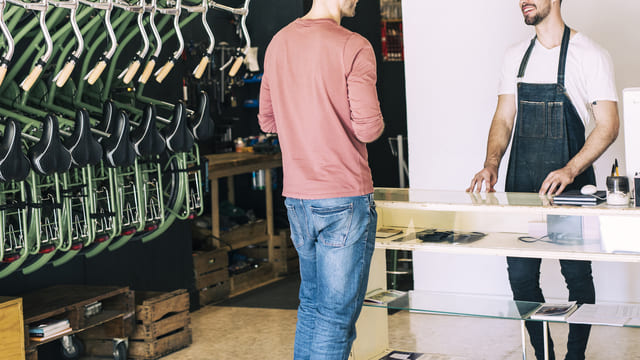


The main figures
On a global scale, the retail sector is very large, with several hundred different distributors. The turnover of the entire sector worldwide exceeds 6030 billion dollars. The sector's annual growth is down 8% compared to 2023, due to a general slowdown in demand. Walmart tops the ranking, with sales of $648 billion. Mexico has seen the strongest expansion, with growth of 28.7%.
SWOT analysis
Strengths
One of the main strengths of retail in 2025 is the main channels that are used to satisfy customers and increase the competitiveness of retailers. Thus, retail in 2025 offers both physical brands, which welcome and advise the customer in his choices, with a role of sales advisors that has evolved a lot over time. E-commerce is also becoming increasingly important, with obvious transformations in consumer habits. "Social" commerce has also become very popular with the youngest, Tik Tok Shop, or Temu.
Technology is becoming increasingly important in retail, with the use of artificial intelligence, augmented reality, and the metaverse to reprioritize customers and deliver more personalized experiences.
Retail has developed a lot in recent years, so its ability to adapt is very effective, especially in times of crisis or inflation, not to mention the consideration of tensions between countries.
Retail media is now worth more than $165 billion worldwide, and advertising spending is constantly increasing.
In addition, retailers are investing more and more in the implementation of stronger, more successful consumer experiences. The delivery methods are both multiple and simplified, click and collect, relay points; The same goes for returns.
Weaknesses
Retail also has, like all sectors of activity, significant weaknesses, which can impact it in the long term. Firstly, the change in purchasing behaviour and above all the fact that it is increasingly complex to build customer loyalty. The circuits are constantly multiplying, consumers have more and more choices and brands sometimes find it difficult to tell the difference.
The profitability of some brands is also sometimes undermined, especially in certain segments. Of course, e-commerce can make it possible to see an improvement, but for some brands, it is too small. Retail is in a period where innovations are becoming essential to interest and satisfy the customer.
What’s more, there is a real domination of the giants of the sector in the world, think especially of groups such as Amazon or Walmart, which occupy a major place in the market. New players have very little room to emerge in the sector, and the conditions for entry are becoming more and more difficult, given the number of products and services offered by the largest companies.
Consumers tend to constantly change brands and preferences or brands depending on the time of year or what they are looking for. The selection criteria are no longer the same, they want products to be delivered quickly, with good customer feedback.
Finally, the regulations are also becoming more complex and stricter. Retailers must adapt to these changes, and comply with the GDPR and all applicable laws.
Opportunities
The retail market is also filled with diverse opportunities for brands. Emerging markets represent a real opportunity, with regions such as Africa, the Middle East and Latin America offering some brands very significant growth prospects.
It should be noted as an example that Mexico is growing by 28.7% this year, this percentage is 10% for the Middle East and Africa. Digitalization is becoming increasingly important in these countries, and there is also a clear development of all infrastructures.
In addition, consumer behaviors and demands have changed a lot in recent years. They want more responsible practices, a circular economy, or companies that reduce their waste and are active in protecting the environment. Second-hand, resale is literally exploding in new technology, electronics and fashion. Packaging is more ecological, and labels have become purchasing criteria.
For brands, one of the only ways to stand out is to offer a better customer experience. AI is regularly used by retailers to offer customers personalized recommendations. As we said above, the role of sales consultants is changing, it's more about places of experiences, communities.
Gradually, digital and physical stores are merging, as consumers can access smoother and more engaging journeys in their shopping process. These hybrid models are being implemented more regularly, brands are becoming real platforms, they are no longer just selling, they rent, they advise, they offer fun activities. It is mainly on this type of service that brands can differentiate themselves.
Threats
The decline in purchasing power is clearly the main threat to be taken into account. Inflation is very high in many regions, and this can affect consumer decisions. For a large number of households, certain purchases are no longer the priority, and retailers are forced to adapt to this new reality.
Geopolitical conflicts are also impacting the sector, with some brands being highly dependent on certain areas. Competition is more intense over time. The barriers to entry are mainly made complex because of differentiation, which is very difficult. Brands must innovate so as not to be overtaken by others, who would be more reactive.
Finally, there can be many risks in terms of cybersecurity and technological risks. Retailers are increasingly exposed to new risks, such as hacking or data theft. This can damage the reputation of the brands.
Conclusion
Global retail in 2025 became one of the main sectors of the global economy, but the challenges attributed to it are still very numerous. The way they operate is changing, both with the demands of consumers that are constantly evolving, but also with the more global changes in society and ecological responsibility, which require them to be more careful and take action in favor of the environment.
More than ever, retailers must be innovative to attract an increasingly difficult customer base and face increasingly fierce competition.