

 Do you need help?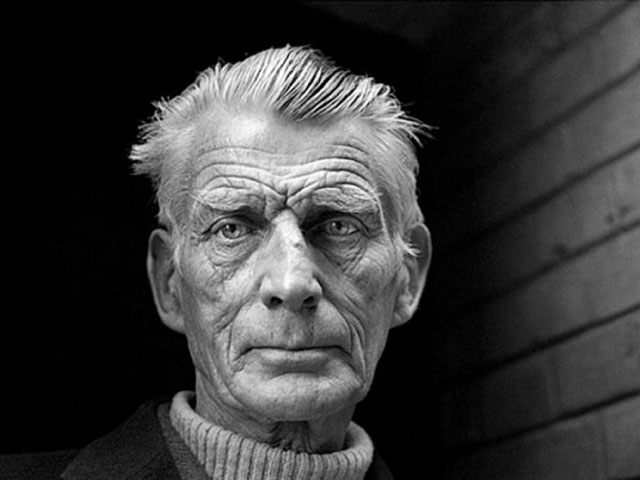


"Waiting for Godot" is a play written in 1952, it is one of Samuel Beckett's most important plays.
This author is renowned for his style, which is based on the theatre of the absurd. He is also appreciated for his critical sense. This play is still widely studied in British literature, but also in French literature. The objects of study are the link of work with many fields, politics, religion, but also communication or the question of time.
In this literature review, we will talk about the importance of the theatre of absurdity, existentialism, religion, communication, but also the question of time, which seems to appear to be central to the work.
Deconstruction of Traditional Language in Beckett's Waiting for Godot
The emergence of the theatre of the absurd
It was during this period that the expression "theatre of the absurd" was born to pigeonhole authors such as Beckett, but also like Adamov or Ionesco.
When it was released on stage, the play "Waiting for Godot" did not fail to fascinate the crowds, but also to disconcert them in many ways.
While some have adored it openly, others have criticized it for being too unusual, too strange according to the people. Some appreciated the audacity that emanated from it, because it corresponded to a kind of break with classical theatre, or at least more conventional.
Beckett indeed has a rather tragic vision of the human in its generality, which is characterized by the failure of communication. In "Waiting for Godot", nothing appears to be conventional, so there is a break with what is called the realism of the time.
Waiting For Godot - Beckett: in what way does Beckett explore the dramatic tensions of communication?
The question of existentialism presents in the work
At that time, and even later, even today, many critics and playwrights were able to associate Beckett's work with the existentialist current.
The author has been compared on many occasions to Sartre or Camus. Moreover, "Waiting for Godot" is often compared to Camus' "The Myth of Sisyphus".
Indeed, the two works have some similarities, such as the fact that the main character is somehow subjected to a repetition that makes no sense, but in which he must still do everything to earn his freedom.
The two main characters of "Waiting for Godot", Vladimir and Estragon, are waiting for Godot, and it is this absence that becomes the main driving force of the play in its entirety. Their waiting is useless, it is total nonsense, but they are waiting anyway, reflecting a rather tragic freedom.
Beckett speaks of the human being as being confronted with uncertainty, with repetition.
The importance of religion
Religion is a notion that remains very present in all of Beckett's work. Moreover, the question that was most debated at the time and still today concerns the identity of Godot. Some may see in this character that everyone expects a reference to God, this reference being reinforced by the similarity between Godot, and "God" which means God in the English language.
However, even if Beckett denied this similarity for a long time, the fact remains that it remains present and almost even obvious in the minds of many readers.
In 1953, Jean Anouilh wrote a review, stating that there was something profoundly Christian about Beckett's work, because of the despair, incomprehension and anguish that were omnipresent in the play. This would be part of a kind of religious tradition of doubt but also of the absurd.
In the play, there are a lot of references to the text of the Bible.
Example of a term paper: The mythological supports of Beckett's Waiting for Godot
Nonsense in communication
Beckett uses language in a way that is quite new for the time. In the communication used by his characters, there is what is called the "discourse void". Initially, the objective of theatre is to signify something, thoughts, emotions. In the case of "Waiting for Godot", the dialogues of the two main characters appear to be completely absurd, with a lot of silence and hesitation, a lot of repetitions as well, which make no sense in the story.
In many analyses, the language of the author of "Waiting for Godot" is tragic but also has something comical. There is a desire to make communication appear as something that is linked to failure, even if in the play, the importance of this communication is emphasized.
For Beckett, language is more a means of highlighting the absurdity of the world.
Example of a term paper on MyStudies: Physical deterioration of Beckett Characters
The central question of time dans the play
The problem of time is central to the whole play.
In traditional plays, readers find a progression in time, in acts, a progression in the year or in the day.
In Beckett's work, the two acts present are almost identical, nothing changes, time seems suspended, even completely removed from all reality.
As far as the characters are concerned, their situation is almost identical from one act to the next.
Time repeats itself all the time identically, nothing is expected of Godot and Godot himself tells nothing. There is an obvious position of rupture, time leads nowhere.
However, if time does not seem to be present, it is different from the body, which is always there. Estragon complains of pain in his feet, Vladimir has bladder problems, Pozzo can't see. There is an importance given to the body, and more specifically to the pain of the body. There is an idea of degradation, of wear and tear of the body that is present in the room, where man can only live while suffering.
Conclusion
Beckett's work is therefore a piece in which it is possible to detect several meanings, there are many possible interpretations, both at the level of communication and religion or time, of the themes omnipresent in the work.
The work also appears to be very rich, waiting becomes a phenomenon. Over time, "Waiting for Godot" is still studied and highlighted, and never in the same way. Each theme can be taken in a different context, considering the anxieties of the moment.